Week 2-The World is Theirs
The Morning: Building What Lasts
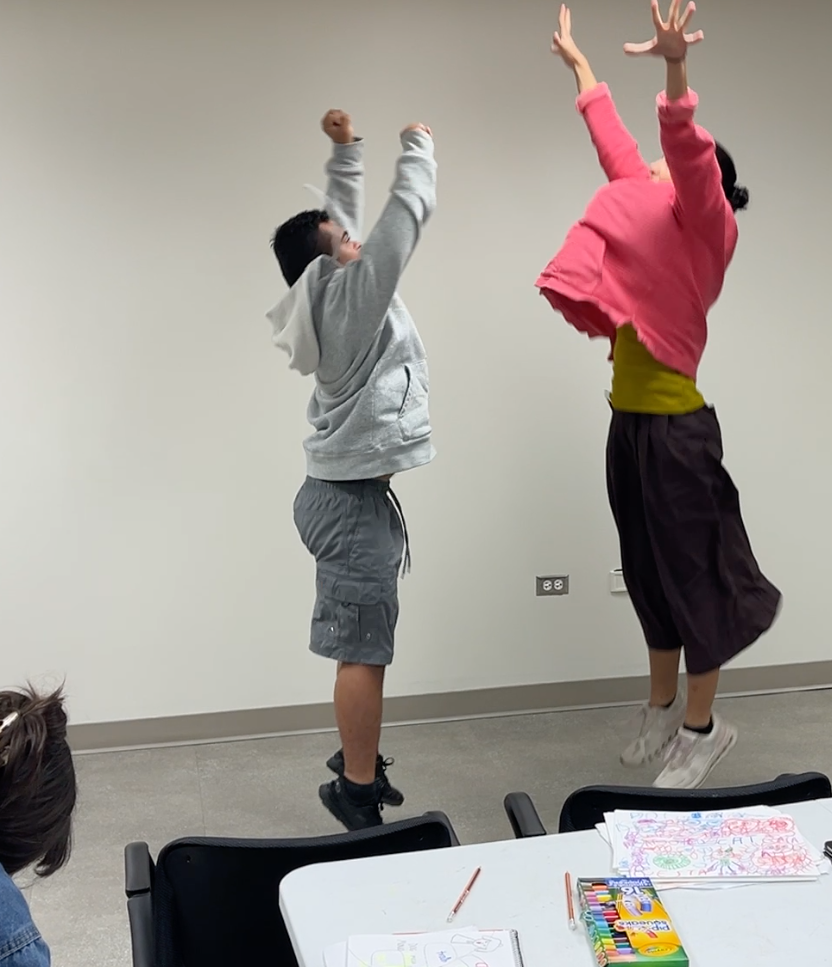
Every session continues the same way: full-body warm-up, palitos, mirror exercises, then into the choreography of the garden. That choreography — the collective sequence we have been building week by week, one gesture per participant drawn from their favourite place in the museum — is becoming something. Julio added the bells this week. The sequence grew.
On Tuesday, we used the established choreography as the structure for a more elaborate mirroring. Because the choreography now exists as shared vocabulary, the mirror exercise had precise content — the pairs were modulating, calibrating, socialising through something held in common rather than improvising from scratch. The observations that followed were the participants' own: you did that quicker, you did that slower, you balanced on the tree, I kept my foot on the ground but you were able to balance. That kind of observation is meta-awareness. It is the group thinking about its own movement.
Wednesday began with the Map of the Senses: a phenomenological walk through the garden, one-to-one, opening to what comes through each sense as you move. Sight. Sound. Touch. Taste. Smell. Five facilitators, five participants, five journeys through the same space. We came back and shared what we had noticed. The variation was extraordinary — the same garden, five entirely different worlds attended to.
By the end of Tuesday, every participant had what we had set out to achieve: a self-portrait, a landscape, and a digital world in progress. In Spanish we call this being homologado — everyone at the same foundation before the group advances. The principle matters more than it might seem. Every task is designed so that those who need to fly can fly and those who need to work on the ground are grounded. No task is left out. Every outcome belongs a hundred percent to the participant.
The First Worlds: Marcelo and Christian
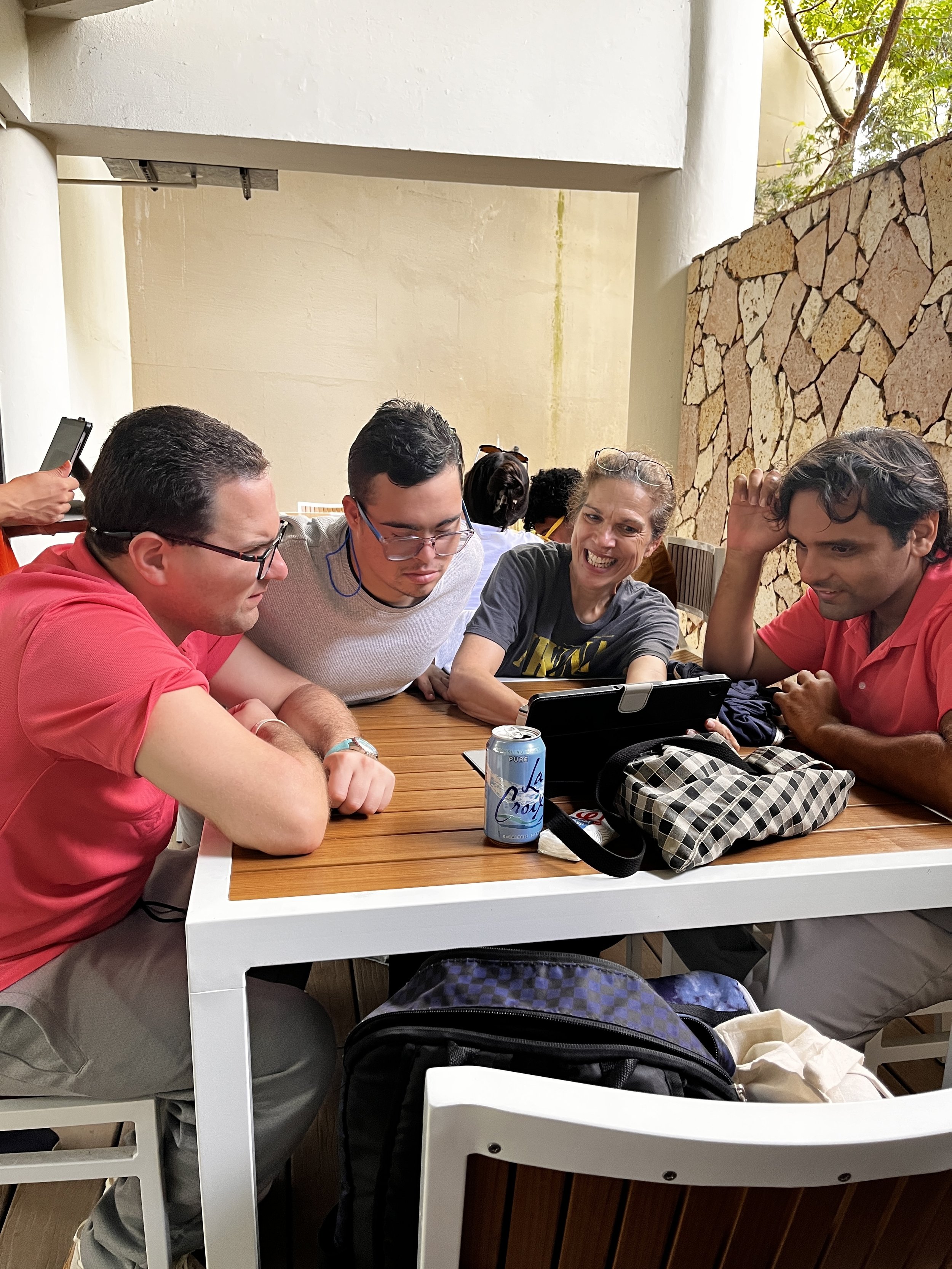
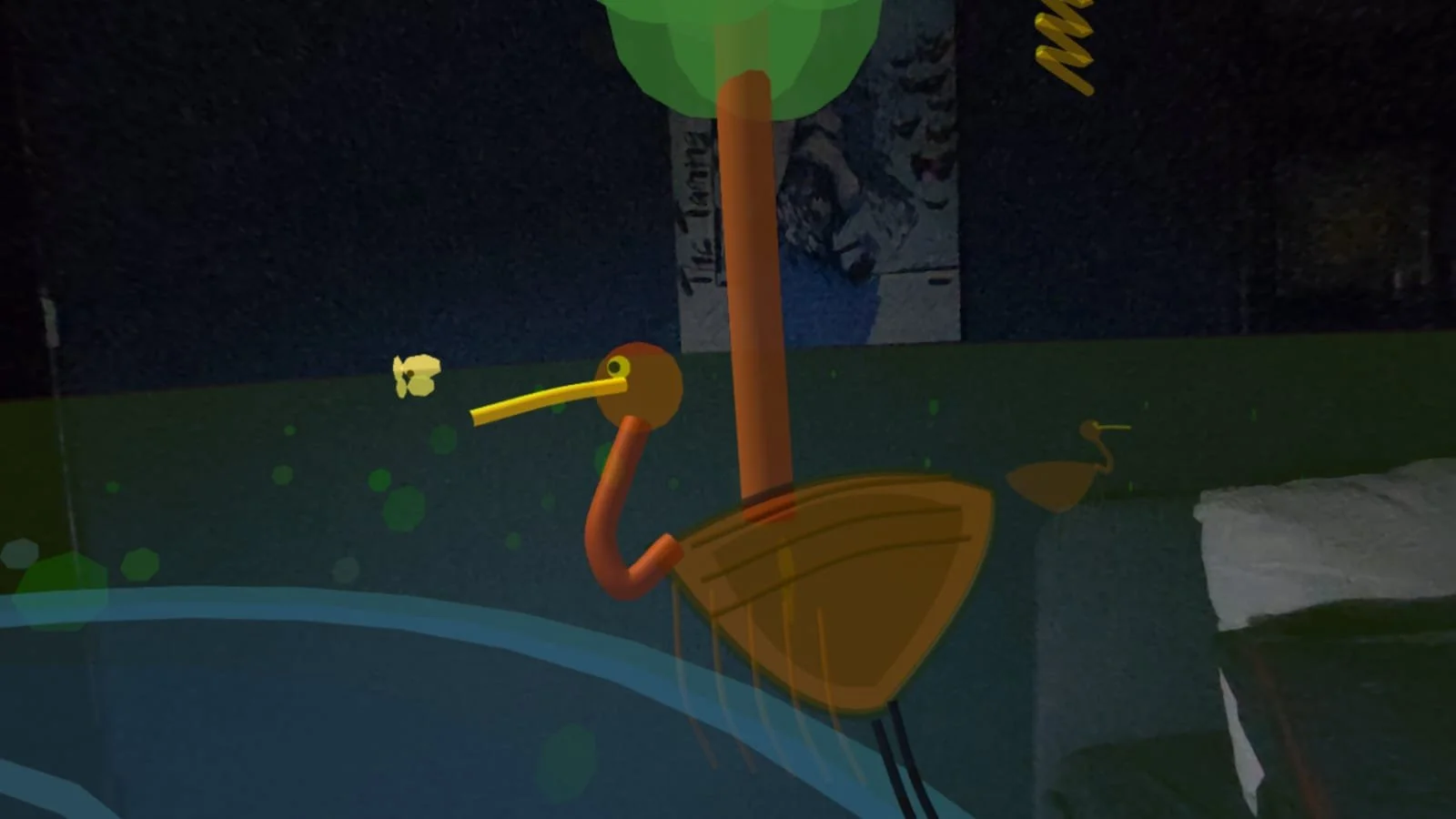
Tuesday afternoon, while the rest of the team worked with landscapes and self-portraits, two participants entered their worlds. Christian — tech-savvy, a gamer — came with his drawing and his eye. He was shown his landscape drawing, then the HTML world on the computer, then the ngrok tunnel was opened in front of him. He understood immediately that this was high-level work. He felt included at that level. He was excited. And then he gave us feedback: this is not enough. He wants to do more. He wants the heron to come to his hand. He wants the fish to react when he approaches. He named Studio Ghibli. We heard him. His world is being rebuilt accordingly.
And then there was Marcelo.
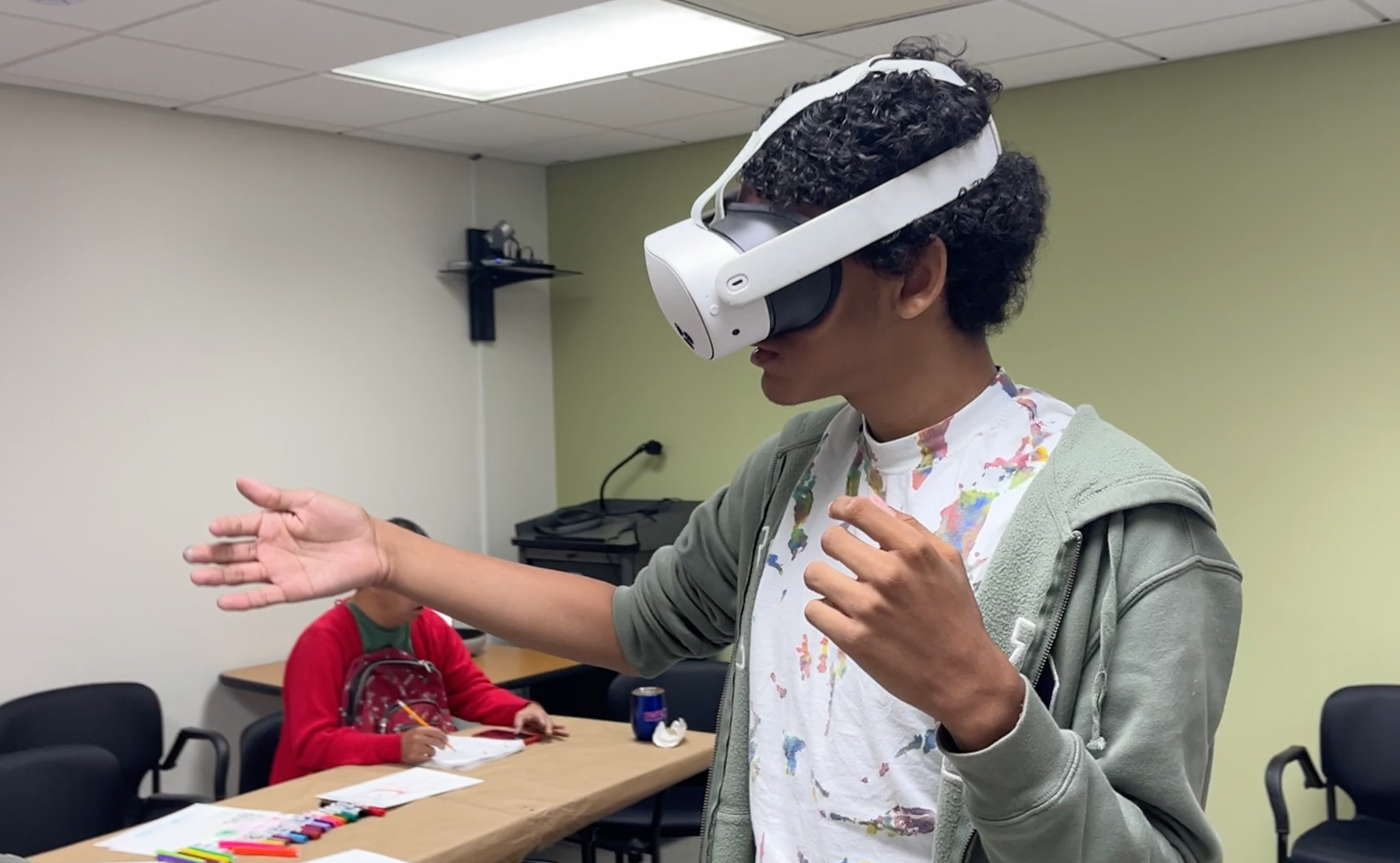
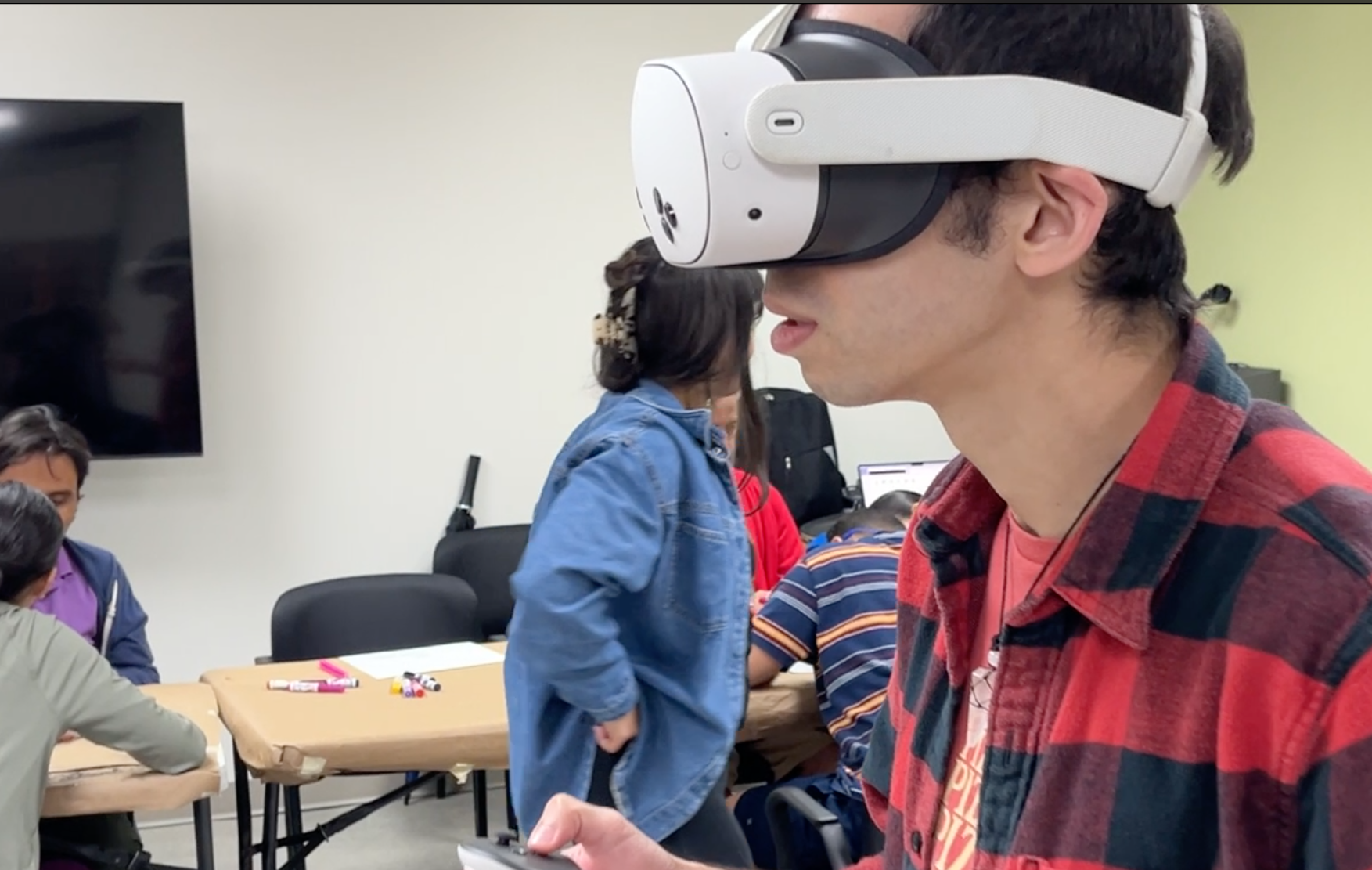
Marcelo is 13 years old — the youngest participant in the project. He absorbs language spatially, atmospherically, reads what others do not notice. On Tuesday afternoon, I said to him: do you want to see your world inside these big glasses that work like a television?He jumped. He took off his glasses. He grabbed the headset. He put it on.
No explanation was needed.
Inside the headset, Marcelo's world is words — the words he had drawn distributed through space, floating at different distances, a semantic landscape he had made. He immediately understood the boundary rule without being told: when he stepped too far, the world disappeared; he took two steps back, and the words returned. He found the audio button independently. He gave himself music.
He stratd grabbing the words. That was non-verbal feedback about the interaction he was seeking, feedback was catalogued. That is the next step. That is what the research is now working toward.
His grandmother was present. She wore the headset afterwards. She entred his world.
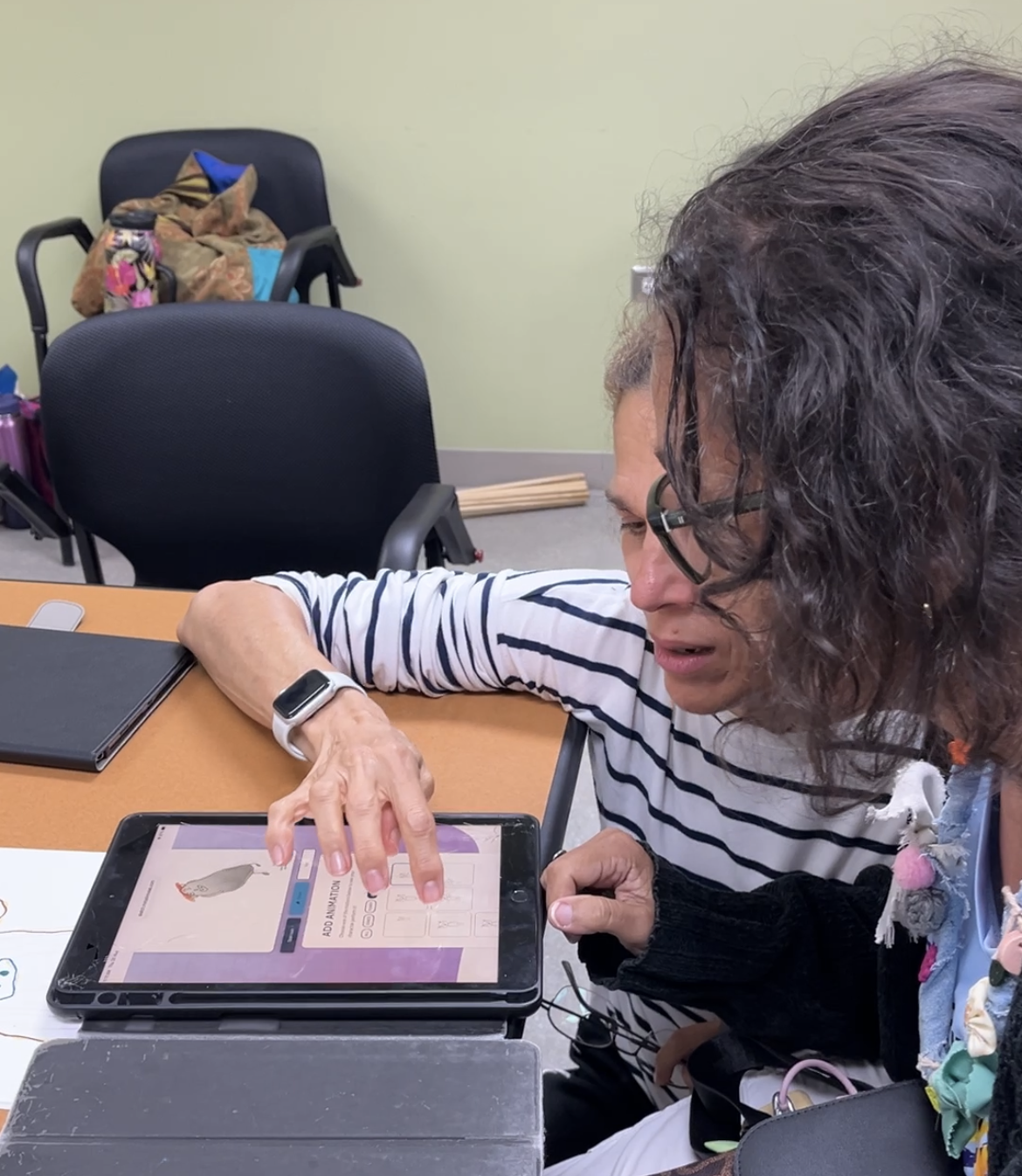
On Wednesday, Meta Animated Drawing arrived for the full group. Not a deep dive — an introduction. How does this work? What happens when you press this? Everybody investigated the tool. The ‘monster problem’ , whre the AI imposes a normative reading o the body where the drawing is not, was largely avoided this week: the portraits were more figurative and the team intervened carefully in the articulation layer before animation — masking, adjusting, ensuring that the drawing itself was moveable before any rendering began. That intervention is not a technical workaround. It is the methodology. I made a basic animated strip mp4 from the actions that each participant had created/. On Thursday each participant hsaw their animation and created their own version of the avatar vocabulary to make a dance. Overnight, a created basic strips joining all the sections together so that each participant had a longer animation with the dance f their avatar. On Friday after the morning session we looked at our animatios, everyone saw each others and discussed. This set the foundation for Mondays work, when we will film those short sequences in the garden. Next week we obnly have three days to consolidate all the explorations of these two weeks into final form. By Tuesday I aim to have all individual AR /VR experiences ready, with interactivity. We have invited the family and careres to jon us. Wednesday, if the weather holds, we are having an end of projecyt picnic!
An important observation became clear this week.
The participants are not receiving a world built for them. They are entering a world that came from their hand, their colour, their mark. Furthermoe, we listened to what they had to say about the draft works and theyprposed what they would like to add. That is not what the existing VR AR design does. Cuurent applucations of VR for this population are primarily used as a training tool, a rehabilitation environment, a carefully designed experience for this population to navigate. All of it is built by someone else. We build ours from the participant's drawings. The world reorganizes itself around embodied presence. That is the difference.