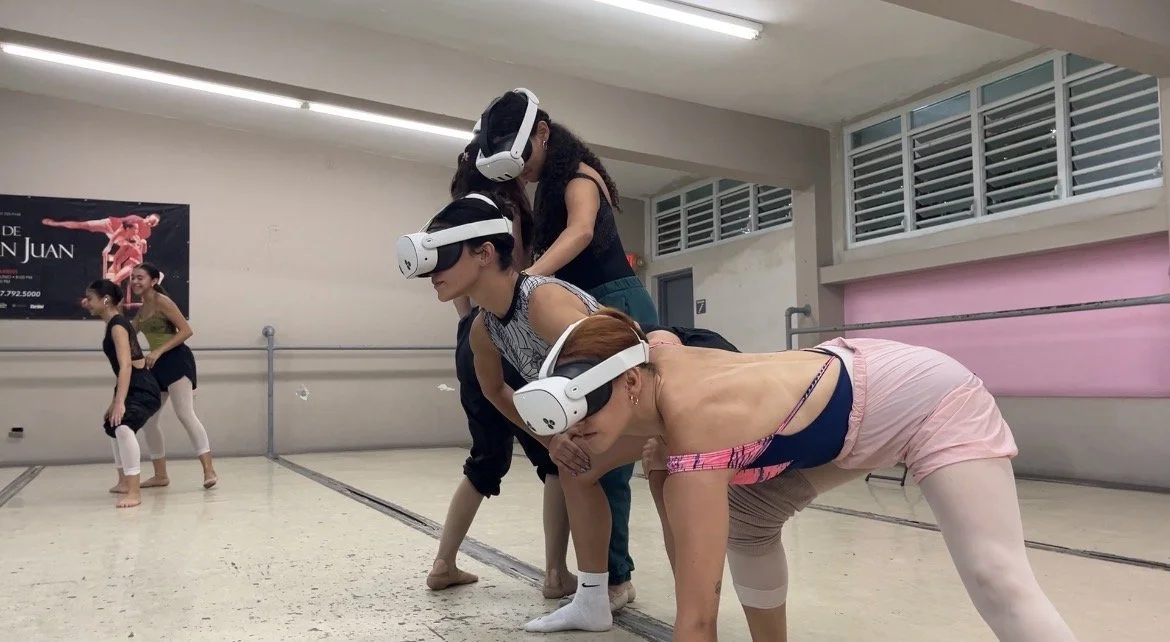
Impossible Dances (2026)
Impossible Dances is a choreographic research project that treats artificial intelligence not as a tool for capturing movement, nor for generating it, but as a generator of conditions the body must navigate. Developed by Ana Sánchez-Colbergit was tested in a two-week laboratory with Ballers de San Juan with twelve ballet-trained dancers. What makes the work new is its third orientation: most AI dance research either archives movement or generates it, while Impossible Dances does neither. The body never enters the system, nothing is recorded or converted into data, and the dancer's response — at every point between full compliance and complete departure — becomes material. Built on a choreographic spatial logic and on browser-native XR that runs without motion capture or institutional infrastructure, the project proposes a non-extractive way for choreography and AI to meet — conditioning rather than capture.
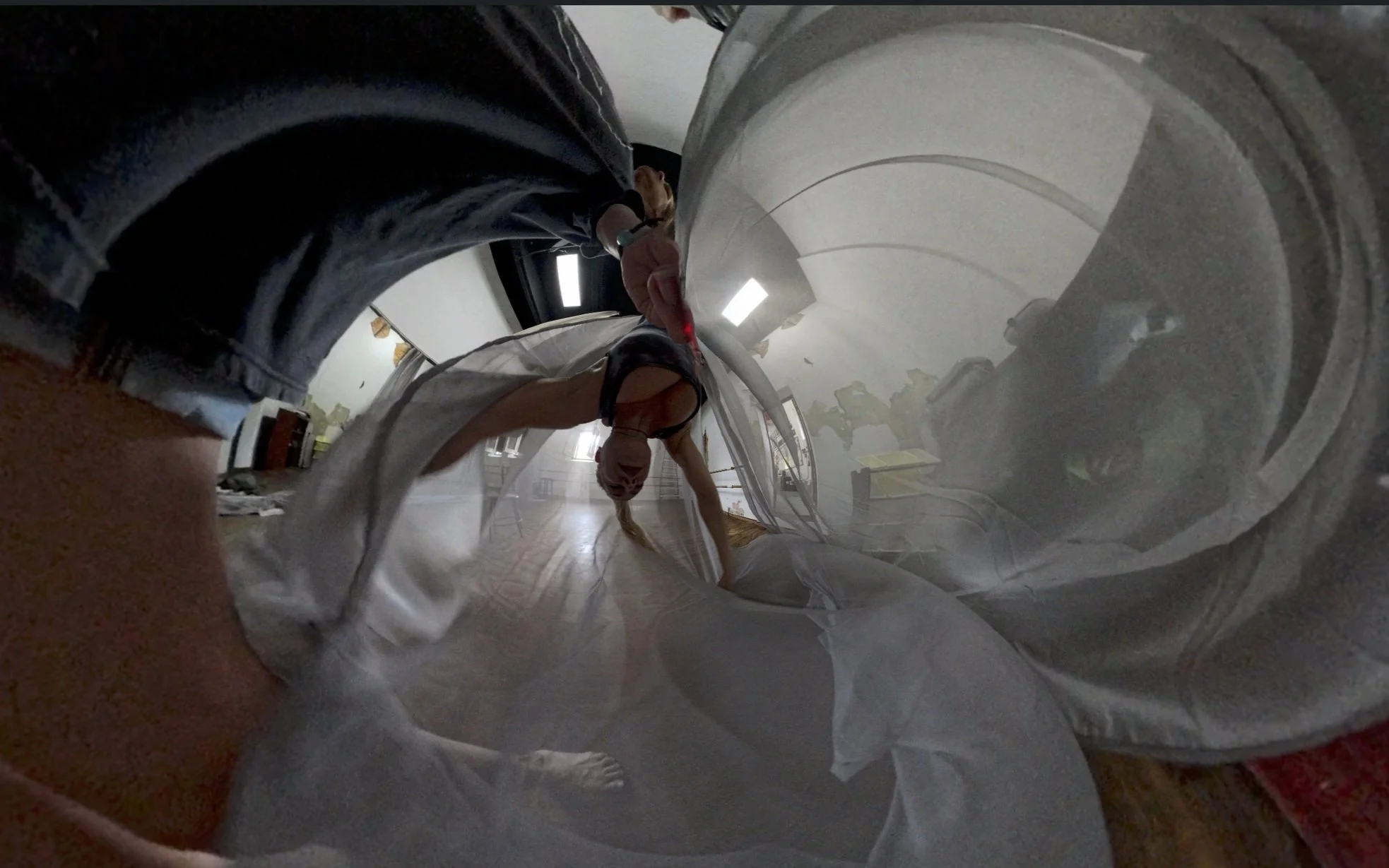
She Beauty/She Beast & Silencio en Movimiento (2024)
The artistic research project Brodmann Area 17 led to two VR Experiences. She Beauty, She Beast is a collaboration between choreographer and director Ana Sánchez-Colberg with aerial artist María De Azúa in an circus aerial work on silks that takes the audience to an aerial space they normally don't have access to. In Silencio en Movimiento Denisse Eliza, director of CoDa21 and dancer David Soler transpose the stage work to the emblematic orchard at El Bastión exploring the connection between nature and immersive technology.
This project is supported by the National Endowment for the Arts (Media Arts Projects) and the Artistic Residencies at El Bastión Cultural Center (2024)
A Visionaire, Inc and CoDa21 Co-Production
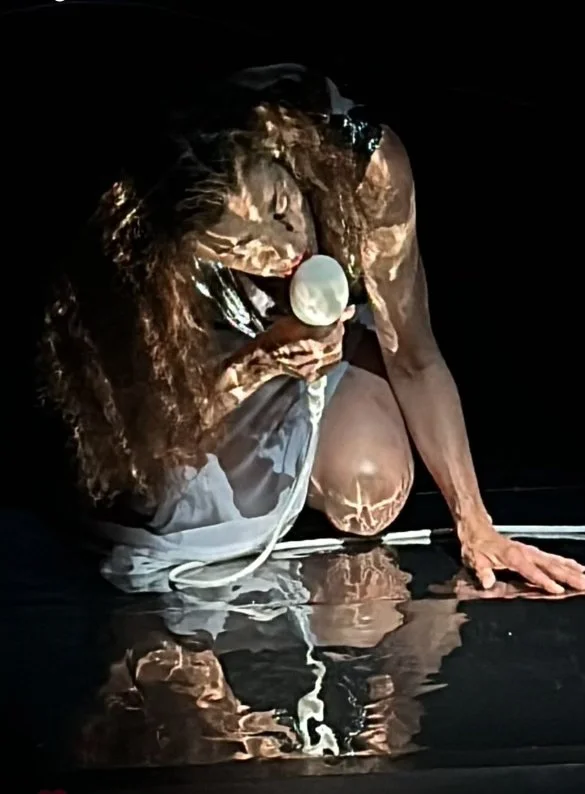
Beauty Was the Beast (2024)
Presented as part of the 61st Festival of Puerto Rican Theatre of the Institute of Culture of Puerto Rico, Victoria Espinosa Theatre, 24-26 May 2024.
Beauty was the Beast parallels Beckett’s Krapp's Last Tape where the use of technology allows the character to visit and review, listen to and edit moments that are presented as part of a fragmented history. The technological devices that are visible as part of the scenography serve as portals to multiple realities where other spaces, both utopian and dystopian, are alluded to; the familiar and the unknown are intertwined, meaning is suggested by the synthesis of live performance, image, and sound without indicating a closed reading